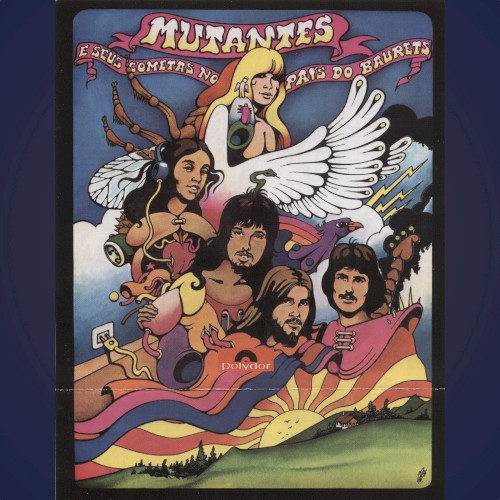
Album Information Section
Album Title: Mutantes e seus cometas no país do baurets
Artist: Os Mutantes
Original Release Date: 1972
Label: Unknown Label
Genres: Psychedelic Rock, Tropicalia
Track Listing:
- 1. Posso perder minha mulher, minha mãe, desde que eu tenha o rock and roll (3:46)
- 2. Vida de cachorro (3:16)
- 3. Dune Buggy (5:25)
- 4. Cantor de mambo (4:39)
- 5. Beijo exagerado / Todo mundo pastou (4:51)
- 6. Balada do louco (4:02)
- 7. A hora e a vez do cabelo nascer (3:34)
- 8. Rua Augusta (4:08)
- 9. Mutantes e seus cometas no país do baurets (9:55)
- 10. Todo mundo pastou II (2:25)
Recording Information
The album “Mutantes e seus cometas no país do baurets” was recorded at the renowned Estúdio Eldorado located in São Paulo, Brazil. The recording sessions took place during 1972, a period marked by the band’s creative peak. The album was produced by Os Mutantes themselves, showcasing their artistic vision and independence. The engineering of the album was handled by the talented Liminha, who played an integral role in capturing the band’s experimental sound.
Notable recording techniques included innovative use of studio effects and tape manipulation, which were signature characteristics of Os Mutantes’ sound. The band often incorporated unconventional instruments and playful soundscapes, resulting in a unique blend of psychedelic rock and Brazilian musical elements. An interesting production note is that the album reflects the band’s ability to intertwine humor and social commentary, a trait that would become a hallmark of their work.
Band Context
At the time of this album’s release, Os Mutantes were at a crucial juncture in their career. Formed in 1966, the band had already established itself as a central figure in the Tropicália movement, a cultural phenomenon that blended Brazilian music with international influences, particularly rock and pop. By 1972, the original lineup had seen some changes, with key members including Rita Lee, Sérgio Dias, and Arnaldo Baptista, each contributing to the band’s eclectic sound.
Prior to the release of “Mutantes e seus cometas no país do baurets,” the band had experienced considerable success with their earlier albums, which included influential works such as “Os Mutantes” and “Divina Comédia.” However, internal tensions and creative differences began to emerge, particularly between members, as the band navigated the complexities of fame and artistic direction. This album would mark a transitional phase, as Rita Lee would eventually depart the band shortly after its release, leading to a significant reshaping of their musical identity.
Track Commentary
The album consists of ten tracks that exemplify Os Mutantes’ signature style, blending rock, Brazilian rhythms, and avant-garde experimentation. The opening track, “Posso perder minha mulher, minha mãe, desde que eu tenha o rock and roll,” sets the tone with its rebellious and humorous take on rock culture. “Vida de cachorro” follows, showcasing a more melodic approach with poignant lyrics that resonate with the listener.
“Dune Buggy” stands out as a quintessential example of the band’s ability to merge different musical styles, featuring whimsical lyrics and a catchy chorus. The track “Cantor de mambo” further illustrates their playful side, incorporating elements of Latin music into their sound. “Beijo exagerado / Todo mundo pastou” serves as a commentary on societal norms and relationships, blending humor with a catchy melody, while “Balada do louco” explores themes of madness and introspection, a recurring motif in their discography.
The title track, “Mutantes e seus cometas no país do baurets,” is an ambitious, nearly ten-minute opus that encapsulates the band’s experimental ethos, blending intricate arrangements and shifting tempos. The album closes with “Todo mundo pastou II,” a brief but impactful track that leaves listeners with a sense of intrigue and reflection. Overall, the album received critical acclaim and has since been regarded as a classic of Brazilian music, solidifying Os Mutantes’ legacy as pioneers of the Tropicália movement and influential figures in the global music landscape.
