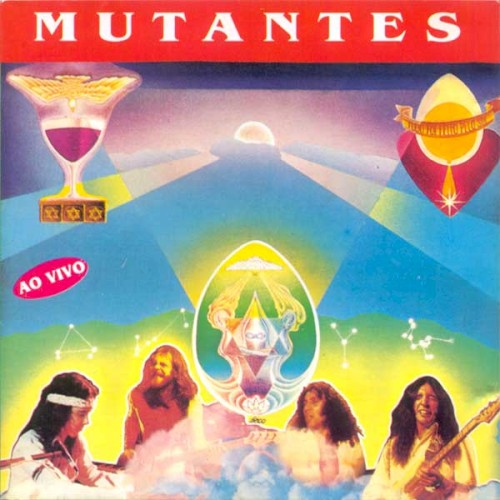
Album Information Section
Album Title: Ao vivo
Artist: Mutantes
Original Release Date: 1976
Label: Som Livre
Genres: Psychedelic Rock, Tropicalia
Track Listing
- 1. Anjos do sul (2:41)
- 2. Benvindos / Mistérios (4:16)
- 3. Trem / Dança dos ventos (2:58)
- 4. Sagitarius (6:15)
- 5. Esquizofrenia (4:20)
- 6. Rio de Janeiro (2:11)
- 7. Loucura pouca é bobagem (4:22)
- 8. Hey tu (2:54)
- 9. Rock’n’Roll City (6:38)
- 10. Tudo explodindo (4:14)
- 11. Grand finale (2:08)
- 12. Anjos do sul (1:52)
Recording Information
The album “Ao vivo” was recorded at the renowned Estúdio da Rádio Nacional located in Rio de Janeiro, Brazil. The recording took place in the year 1976, capturing the essence of the band’s live performance energy. The production was helmed by the band members themselves, particularly Sérgio Dias, who was pivotal in shaping the sound of this live album.
Notable engineering techniques included the use of multi-track recording, allowing the band to layer their distinct sounds effectively. The album features a mix of raw live energy and carefully crafted studio techniques, a hallmark of the Mutantes’ innovative approach to music production. The live setting further enhanced their psychedelic sound, making the audience’s experience palpable through the recordings.
Band Context
During the time of “Ao vivo,” Mutantes was at a pivotal point in their career. Formed in 1966, the band was a significant part of the Tropicália movement, blending rock with Brazilian musical traditions. By the mid-1970s, they had already established themselves as an influential force in Brazilian music, known for their experimental sounds and eclectic style.
The lineup during the recording of “Ao vivo” included founding members Sérgio Dias and Arnaldo Baptista, along with other collaborators. By this time, the band’s dynamics had evolved, with Arnaldo Baptista stepping back from performing due to personal struggles, which colored the band’s live performances. The album captures both the vibrancy of their music and hints of the underlying tensions within the group.
In the years leading up to the album’s release, Mutantes had experienced significant changes, including shifts in their musical direction and lineups. This live recording serves as a testament to their resilience and adaptability in the face of changing musical landscapes in Brazil.
Track Commentary
The tracks on “Ao vivo” reflect a rich tapestry of musical styles, from the upbeat rhythms of “Anjos do sul” to the introspective tones of “Esquizofrenia.” Each song showcases the band’s unique blend of psychedelic rock and Brazilian traditional music, with instruments ranging from electric guitars to regional percussion.
Standout tracks include “Rock’n’Roll City,” which combines a powerful rock sound with a playful nod to urban life, and “Sagitarius,” which features intricate arrangements and a captivating melody. “Benvindos / Mistérios” serves as a brilliant example of their ability to fuse different musical genres, creating a sound that is both familiar and avant-garde.
Critical reception of “Ao vivo” has been largely positive, with many praising it for its raw live energy and the authenticity it brings to the Mutantes’ discography. The album has gained a legacy as a significant document of the band’s live performances, capturing the spirit of Brazilian rock during a transformative era. The closing track, a reprise of “Anjos do sul,” serves as a fitting conclusion, leaving listeners with a sense of nostalgia and a yearning for the band’s vibrant presence.
In summary, “Ao vivo” stands as a crucial piece of the Mutantes’ legacy, illustrating their evolution as artists and their profound impact on Brazilian music. The album captures not only their musical prowess but also the cultural context of a country undergoing significant changes during the 1970s.
