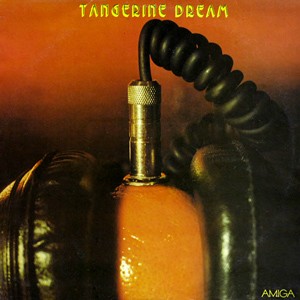
Album Information Section
Album Title: Pergamon
Artist: Tangerine Dream
Original Release Date: January 1981
Label: Relativity Records
Genres: Electronic, Ambient, Krautrock
Track Listing:
- 1. Quichotte, Part I (23:23)
- 2. Quichotte, Part II (22:53)
Recording Information
“Pergamon” was recorded at the renowned Hansa Tonstudio in Berlin, Germany, a studio famous for its association with various iconic artists, including David Bowie and U2. The recording sessions took place in the late 1980s, specifically during the year 1980, as the band moved toward creating a more expansive and atmospheric sound.
The album was produced by the band members themselves, specifically Edgar Froese, Christopher Franke, and Peter Baumann, who were deeply involved in the production and engineering aspects. The recording techniques employed during the sessions included the use of synthesizers and sequencers that were groundbreaking at the time, allowing Tangerine Dream to explore complex soundscapes and textures.
An interesting note regarding the production of “Pergamon” is its origins in a live performance at the Pergamon Museum in Berlin. This venue, with its rich historical context, played a significant role in shaping the atmosphere of the album. The live recording was later transformed into studio tracks, capturing the essence of the performance while expanding upon it with studio techniques.
Band Context
At the time of “Pergamon,” Tangerine Dream was in a transitional phase, having gained significant acclaim in the 1970s with albums like “Phaedra” and “Rubycon.” The lineup during this period primarily consisted of founding member Edgar Froese, along with Christopher Franke and Johannes Schmoelling, who had recently joined the group. This period marked a shift towards a more melodic and structured approach compared to their earlier, more avant-garde works.
Before the release of “Pergamon,” Tangerine Dream had been exploring various avenues, including soundtracks for films such as “Sorcerer” and “Thief.” This foray into film music began to influence their studio work, leading to an increased focus on creating immersive audio experiences. The success of their previous albums and film scores provided a strong foundation for the release of “Pergamon,” which continued to establish their reputation as pioneers of electronic music.
In the years leading up to the album’s release, the band also saw changes in their management and distribution, which led them to sign with Relativity Records for the American market, further solidifying their international presence.
Track Commentary
“Pergamon” is primarily composed of two extensive tracks: “Quichotte, Part I” and “Quichotte, Part II.” Each track is an expansive journey, showcasing Tangerine Dream’s signature blend of electronic instrumentation and ethereal melodies. The album is rooted in the electronic genre, but it also incorporates elements of ambient and sequencer-driven music, which were hallmarks of the band’s style.
“Quichotte, Part I” opens with a slowly evolving soundscape that gradually builds tension and complexity through layers of synthesizers and rhythmic sequences. The track, lasting over 23 minutes, takes the listener on a meditative journey, inviting deep contemplation and introspection. The use of sequencers creates a pulsating rhythm that underpins the melodic explorations, a technique that Tangerine Dream would continue to refine in later works.
“Quichotte, Part II” follows with a similar structure, yet it diverges into a more melodic territory, showcasing the band’s ability to blend complex musical ideas with accessible themes. This track emphasizes a sense of resolution, bringing a feeling of closure to the expansive sonic narrative established in the first part.
Although “Pergamon” did not produce any singles in the traditional sense, both tracks have become significant in the band’s live performances, often reinterpreted and extended in concert settings. The critical reception of the album has remained generally positive, with many fans and critics noting its atmospheric qualities and the seamless integration of live performance energy with studio polish. Over time, “Pergamon” has been regarded as a pivotal release in Tangerine Dream’s discography, contributing to their legacy as innovators in electronic music.
