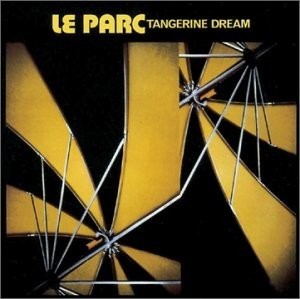
Album Information Section
Album Title: Le Parc
Artist: Tangerine Dream
Original Release Date: May 1985
Label: Castle Communications
Genres: Electronic, Ambient, New Age
Track Listing:
- 1. Bois de Boulogne (Paris) – 5:25
- 2. Central Park (New York) – 3:41
- 3. Gaudi Park (Guell Garden Barcelona) – 5:14
- 4. Tiergarten (Berlin) – 3:11
- 5. Zen Garden (Ryoanji Temple Kyoto) – 4:52
- 6. Le Parc (L.A. – Streethawk) – 3:21
- 7. Hyde Park (London) – 4:01
- 8. The Cliffs of Sydney (Sydney) – 5:45
- 9. Yellowstone Park (Rocky Mountains) – 6:12
Recording Information
Le Parc was recorded at the famed Utopia Studios in London, England. The recording sessions took place primarily in 1985, coinciding with the album’s release. The production was spearheaded by Tangerine Dream themselves, with Paul McKenna serving as the engineer. The album features a blend of synthesizers and sequencers, including the use of the PPG Wave synthesizer, which was prominent in the band’s sound during this era.
Notably, Le Parc was conceived as a tribute to various parks around the world, and this thematic approach influenced both the songwriting and the ambient soundscapes. The album’s unique sound was achieved by layering electronic textures and utilizing innovative studio techniques that were cutting-edge for the mid-1980s. One interesting production note is that the album was partially inspired by the band’s experiences during their tours in the United States and Europe, which led them to explore the natural beauty of urban parks.
Band Context
During the mid-1980s, Tangerine Dream was in a period of transition. Originally formed in 1967, the band had evolved from its early experimental roots to embrace a more polished electronic sound. By the time of Le Parc, the lineup consisted of Edgar Froese, Johannes Schmoelling, and Chi Medard. Froese remained the central figure and primary composer, while Schmoelling’s contributions to the band’s sound were becoming increasingly significant.
Leading up to the release of Le Parc, Tangerine Dream had achieved commercial success with albums like Stratosfear and Exit. However, the band faced challenges with the changing landscape of the music industry, particularly as electronic music began to gain mainstream popularity. The release of Le Parc marked a continued exploration of thematic albums, a direction that would define their work in the subsequent years.
Track Commentary
The tracks on Le Parc are a sonic journey through various parks around the globe, each contributing to the overall narrative of nature and urban life. The opening track, Bois de Boulogne (Paris), sets the tone with its atmospheric synths and gentle melodies, drawing listeners into a tranquil soundscape. Central Park (New York) follows, showcasing a more rhythmic approach that reflects the vibrant energy of New York City.
As the album progresses, tracks like Gaudi Park (Guell Garden Barcelona) and Zen Garden (Ryoanji Temple Kyoto) highlight the diversity of the parks represented, each piece encapsulating the essence of its namesake. The standout track, Le Parc (L.A. – Streethawk), is particularly noteworthy for its cinematic quality, often regarded as a fan favorite due to its mesmerizing melodies and rich textures.
The closing track, Yellowstone Park (Rocky Mountains), serves as a reflective conclusion to the album, allowing listeners to savor the auditory experience. Critical reception of Le Parc was generally positive, with many praising its cohesive theme and the intricate sound design that characterized Tangerine Dream’s work during this period. The album has since been revered as a classic in the electronic genre and remains a significant entry in the band’s extensive discography.
