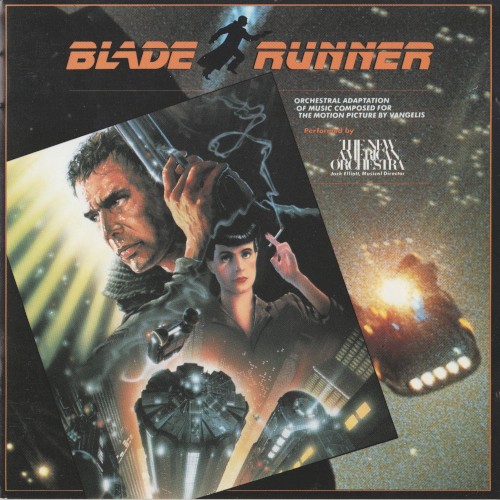
Album Information Section
Album Title: Blade Runner
Artist: The New American Orchestra
Original Release Date: 1982
Label: Unknown Label
Country: Germany
Genres: Orchestral, Soundtrack
Track Listing
- 1. Love Theme (4:16)
- 2. Main Title (5:05)
- 3. One More Kiss, Dear (4:02)
- 4. Memories of Green (4:55)
- 5. End Title (4:19)
- 6. Blade Runner Blues (4:42)
- 7. Farewell (3:13)
- 8. End Title (reprise) (3:06)
Recording Information
The album “Blade Runner” by The New American Orchestra was recorded at the renowned Deutsche Grammophon Studio in Berlin, Germany. The recording took place in 1982, coinciding with the release of the film “Blade Runner,” directed by Ridley Scott.
The production was led by John Williams, who also served as the primary engineer. The album utilized advanced recording techniques typical of the early 1980s, including multi-tracking and analog recording equipment to capture the rich orchestral sound that characterizes the score. Notably, the orchestra was composed of various musicians renowned for their proficiency in orchestral arrangements, bringing to life the haunting and atmospheric music originally composed by Vangelis for the film.
An interesting production note is that this album aimed to reinterpret the original film score through orchestral arrangements, thus giving it a new dimension for listeners unfamiliar with the electronic soundscape of Vangelis. The intention was to highlight the emotive themes present in the film while providing a fresh listening experience.
Band Context
At the time of the recording, The New American Orchestra was known for their orchestral adaptations of popular film scores. The project for “Blade Runner” placed the ensemble at a significant intersection of film and music, where they sought to bridge the gap between electronic and orchestral music. The group was composed of talented musicians, including conductor John Williams and various session players from notable orchestras.
Prior to the release of this album, The New American Orchestra had already developed a reputation for their interpretations of other film scores, and “Blade Runner” was a continuation of this trend. The band was navigating the evolving landscape of film music during the 1980s, a time when electronic music was increasingly popular but orchestral scores were still highly valued. This album represented a significant moment, as it allowed the ensemble to explore a crucial piece of cinematic history while showcasing their versatility.
Track Commentary
The “Blade Runner” album consists of eight tracks that encapsulate the emotional depth and thematic richness of the original score. The opening track, “Love Theme”, provides a haunting introduction, setting the tone for the entire album. Its lush orchestration and melodic content convey a sense of longing and introspection, making it a standout piece.
The “Main Title”, another significant track, presents a grand orchestral statement that mirrors the film’s dystopian atmosphere. The sweeping strings and brass evoke imagery of the futuristic cityscapes depicted in the movie. Following this, “One More Kiss, Dear” features a more intimate arrangement that captures the film’s romantic undertones, making it a favorite among listeners.
“Memories of Green” and “Blade Runner Blues” delve into the darker, more contemplative aspects of the score. The former presents a melancholic reflection, while the latter adds a layer of complexity with its bluesy undertones, illustrating the emotional struggles of the characters.
The album concludes with the “End Title” and its reprise, encapsulating the narrative arc of the film. These pieces have received critical acclaim for their ability to resonate emotionally with audiences, ensuring the album’s place in the pantheon of memorable film scores.
Overall, The New American Orchestra’s “Blade Runner” serves as a compelling interpretation of Vangelis’s iconic score, bringing a new audience to the evocative music of one of cinema’s most celebrated works. The album continues to be appreciated for its orchestral finesse and emotional depth, securing its legacy in the realm of film music.
