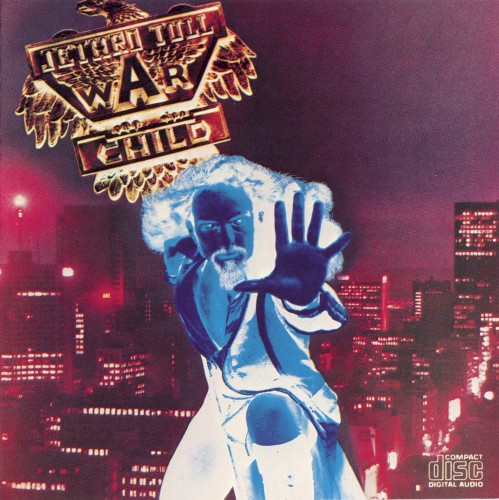
Album Information Section
Album Title: War Child
Artist: Jethro Tull
Original Release Date: October 14, 1974
Label: Unknown Label
Track Listing:
- 1. WarChild (4:35)
- 2. Queen and Country (3:02)
- 3. Ladies (3:20)
- 4. Back-Door Angels (5:29)
- 5. Sealion (3:38)
- 6. Skating Away on the Thin Ice of the New Day (3:58)
- 7. Bungle in the Jungle (3:37)
- 8. Only Solitaire (1:30)
- 9. The Third Hoorah (4:51)
- 10. Two Fingers (5:08)
Recording Information
Jethro Tull’s “War Child” was recorded at the renowned Chateau d’Hérouville studio, located in France. The recording sessions took place primarily in the summer of 1974, marking a productive period for the band. The album was produced by the band’s frontman, Ian Anderson, along with engineer John Burns, known for his work with various progressive rock acts.
During the recording of “War Child,” innovative techniques were employed, including the use of multi-track recording to layer various instrumental sections, a hallmark of Tull’s complex sound. The band experimented with different arrangements that combined rock with elements of folk and classical music, resulting in a distinct sound that would characterize much of their work. A notable aspect of the production was the incorporation of orchestral arrangements and the blending of acoustic and electric instruments, which contributed to the album’s rich sonic tapestry.
Band Context
At the time of “War Child,” Jethro Tull was at a pivotal point in their career. Following the success of their previous albums, including “Aqualung” and “Thick as a Brick,” the band faced pressures to deliver another commercially viable and artistically compelling project. The lineup during this period featured Ian Anderson (vocals, flute, acoustic guitar), Martin Barre (electric guitar), Jeffrey Hammond (bass guitar), John Evan (keyboards), and Barriemore Barlow (drums).
Leading up to the album’s release, the band had experienced significant changes, including the departure of founding member Glenn Cornick and the evolution of their sound. The early 1970s had seen Tull transitioning from a more blues-oriented rock band to one that explored complex themes and intricate musical structures. “War Child” was conceived as a concept album, reflecting the turbulent times of the 1970s, with themes of war and social issues permeating the lyrics.
Track Commentary
The opening track, “WarChild,” sets the tone for the album with its driving rhythm and poignant lyrics that critique the consequences of war. The subsequent track, “Queen and Country,” showcases a more melodic approach, highlighting Anderson’s lyrical prowess and the band’s ability to blend rock with folk influences.
Notable tracks include “Bungle in the Jungle,” which became one of the standout singles from the album, reaching commercial success and becoming a staple in Jethro Tull’s live performances. The song features a catchy chorus and intricate instrumentation, exemplifying the band’s knack for combining rock with storytelling. “Skating Away on the Thin Ice of the New Day” is another highlight, showcasing a reflective quality and intricate flute melodies that are characteristic of Anderson’s style.
Other tracks like “Only Solitaire” and “Two Fingers” offer a more introspective look at human emotion and relationships, contrasting with the more energetic tracks on the album. “War Child” received mixed reviews upon release but has since gained recognition for its ambitious concept and diverse musical styles. The album is often remembered for its exploration of poignant themes and its ability to reflect the socio-political climate of the time.
Overall, “War Child” remains a significant entry in Jethro Tull’s discography, showcasing their willingness to experiment and evolve their sound while addressing meaningful themes through their music. It serves as a testament to the band’s enduring legacy in the progressive rock genre.
