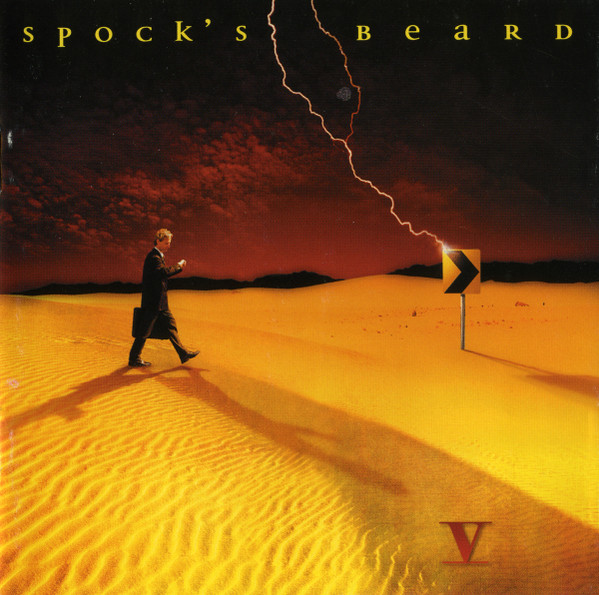
Album Information Section
Album Title: V
Artist: Spock’s Beard
Original Release Date: August 28, 2000
Label: Metal Blade Records
Genres: Progressive Rock, Symphonic Rock
Track Listing:
- 1. At the End of the Day (16:28)
- 2. Revelation (6:05)
- 3. Thoughts, Part II (4:39)
- 4. All on a Sunday (4:04)
- 5. Goodbye to Yesterday (4:39)
- 6. The Great Nothing (27:01)
Recording Information
Spock’s Beard recorded their fifth studio album, “V,” at the renowned The Village Recorders in Los Angeles, California. The recording sessions took place in 2000, during a time when the band was solidifying their place within the progressive rock genre. The album was produced by the band themselves in collaboration with renowned engineer Rich Mouser, who had previously worked on their earlier albums. Notably, “V” saw the band employing a mix of traditional analog techniques alongside digital recording methods, utilizing state-of-the-art equipment to achieve a polished and expansive sound.
During the recording process, the band experimented with layering harmonies and complex arrangements, aiming to capture the essence of their live performances. An interesting production note is that the album features a variety of instruments, including vintage keyboards and synthesizers, which played a crucial role in shaping the album’s rich soundscapes. The band members also drew inspiration from their experiences and emotions at the time, providing a personal touch to the lyrics and compositions.
Band Context
At the time of the release of “V,” Spock’s Beard was experiencing a significant period of growth and recognition within the progressive rock scene. Formed in 1992, the band had already established themselves with a strong discography, but “V” marked a turning point in their career. The lineup during this recording consisted of Neal Morse (vocals, keyboards), Alan Morse (guitar, backing vocals), Dave Meros (bass, backing vocals), and Nick D’Virgilio (drums, vocals). This lineup showcased a strong collaboration among the members, blending their unique talents to create intricate musical compositions.
Prior to the album, the band had been on a creative high, following the success of their previous albums “The Kindness of Strangers” and “Day for Night.” However, in the lead-up to “V,” Neal Morse had begun to explore his spirituality, which would influence the lyrical direction of the album. This period also saw the band gaining a loyal fanbase, partially due to their dynamic live performances and the increasing popularity of the progressive rock revival in the late 1990s and early 2000s.
Track Commentary
The album opens with “At the End of the Day,” a sprawling 16-minute epic that encompasses a wide range of musical styles, from symphonic rock to hard-hitting progressive segments. This track sets the tone for the album, showcasing the band’s capacity for both lyrical depth and technical prowess. The second track, “Revelation,” offers a more concise experience, yet it retains the band’s signature intricate arrangements and thought-provoking lyrics.
“Thoughts, Part II” serves as a reflective moment within the album, providing a contemplative contrast to the more dynamic tracks. Following this is “All on a Sunday,” which presents a more straightforward rock sound while still incorporating the band’s progressive elements. “Goodbye to Yesterday” allows for emotional exploration, combining poignant lyrics with rich instrumentation that resonates with listeners.
The centerpiece of the album, “The Great Nothing,” is a 27-minute masterpiece that delves into existential themes, blending various musical motifs and transitions that keep the listener engaged throughout its duration. This track is often highlighted as a standout piece in the band’s discography, showcasing their ability to weave complex narratives into their music.
Overall, “V” received critical acclaim upon its release, with many praising its ambitious compositions and lyrical depth. The album solidified Spock’s Beard’s reputation as a leading band in the progressive rock genre, contributing to their legacy and influencing a new generation of musicians. Its tracks continue to resonate with fans and are frequently featured in live performances, ensuring that the spirit of “V” lives on within the progressive rock community.
