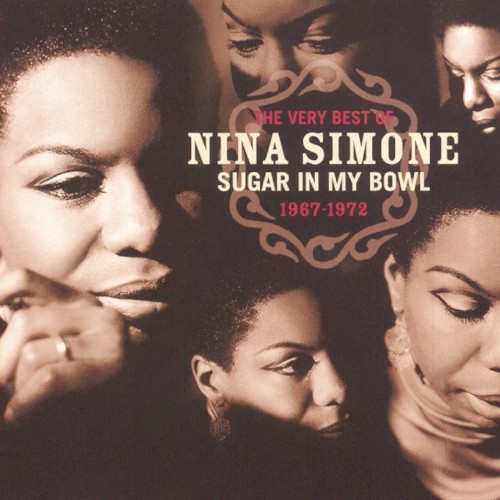
Album Information Section
Album Title: Sugar in My Bowl: The Very Best of Nina Simone 1967-1972
Artist: Nina Simone
Original Release Date: 1998
Label: BMG
Genres: Jazz, Soul, Blues
Track Listing
- 1. My Man’s Gone Now (4:20)
- 2. Since I Fell for You (2:51)
- 3. I Want a Little Sugar in My Bowl (2:33)
- 4. Do I Move You (Version II) (2:20)
- 5. Blues for Mama (4:00)
- 6. Backlash Blues (2:29)
- 7. In the Dark (2:56)
- 8. Consummation (4:14)
- 9. Go to Hell (2:50)
- 10. I Wish I Knew How It Would Feel to Be Free (3:12)
- 11. Turning Point (2:04)
- 12. Turn Me On (2:31)
- 13. The Look of Love (2:25)
- 14. To Love Somebody (2:44)
- 15. I Can’t See Nobody (3:17)
- 16. In the Morning (2:44)
- 17. Do What You Gotta Do (3:37)
- 18. Ain’t Got No, I Got Life (2:20)
- 19. Please Read Me (2:46)
- 20. Martin Luther King Suite: Sunday in Savannah (6:00)
- 21. Martin Luther King Suite: Why (The King of Love Is Dead) (6:40)
- 22. Martin Luther King Suite: Mississippi Goddam (5:31)
- 23. I Think It’s Going to Rain Today (3:31)
- 24. I Get Along Without You Very Well (Except Sometimes) (4:56)
- 25. Nobody’s Fault but Mine (3:03)
- 26. Another Spring (3:34)
- 27. Compassion (1:39)
- 28. Seems I’m Never Tired of Lovin’ You (3:02)
- 29. I Shall Be Released (4:04)
- 30. To Be Young, Gifted and Black (2:55)
- 31. Just Like Tom Thumb’s Blues (4:53)
- 32. Suzanne (5:15)
- 33. My Father (dialogue) (1:43)
- 34. Jelly Roll (8:15)
- 35. Tell It Like It Is (3:55)
- 36. Mr. Bojangles (5:01)
- 37. Here Comes the Sun (3:50)
- 38. Ooh Child (3:19)
- 39. Poppies (4:48)
- 40. 22nd Century (8:45)
Recording Information
The album “Sugar in My Bowl: The Very Best of Nina Simone 1967-1972” compiles various tracks recorded primarily at the RCA Studios in New York City during the late 1960s to early 1970s. The exact recording dates span from 1967 to 1972, a period marked by both creative and personal upheaval for Nina Simone. The production was overseen by notable figures, including the legendary producer and arranger Hal Mooney, who helped shape Simone’s sound during this era. The album features a mix of studio and live recordings, showcasing Simone’s dynamic vocal delivery and instrumental arrangements.
In terms of recording techniques, the production utilized traditional analog equipment, which was standard for the era. This choice contributed to the warm, rich sound that characterizes many tracks on the album. Notably, Simone’s powerful voice often took center stage, with minimalistic arrangements that allowed her emotional expression to resonate deeply with listeners. The album also features some tracks recorded in concert settings, capturing the raw energy and spontaneity of her live performances.
Band Context
Nina Simone, born Eunice Kathleen Waymon, was already an established artist by the time this compilation was released. In the late 1960s, she was experiencing a significant evolution in her music, influenced by the civil rights movement and her own personal struggles. This period was marked by a commitment to social justice and an exploration of themes related to race, identity, and empowerment in her music.
During this time, Simone was often accompanied by a talented band that included prominent musicians who contributed to her distinctive sound. The lineup varied from session to session but consistently featured skilled instrumentalists familiar with jazz, blues, and classical music, aligning perfectly with her eclectic style. The late 1960s and early 1970s were turbulent for Simone, as she navigated complex personal relationships and her evolving role as an artist and activist, leading to both creative breakthroughs and challenges.
Track Commentary
The tracks on “Sugar in My Bowl” reflect a rich tapestry of musical styles and themes, showcasing Simone’s versatility as a vocalist and musician. Standout tracks include “I Want a Little Sugar in My Bowl,” a sensuous and playful declaration of desire, and “Ain’t Got No, I Got Life,” which serves as a powerful anthem of resilience amidst adversity. The inclusion of the “Martin Luther King Suite” is particularly significant, representing Simone’s deep engagement with social issues and her commitment to using music as a form of protest.
Other notable tracks such as “I Wish I Knew How It Would Feel to Be Free” and “To Be Young, Gifted and Black” have become enduring classics, resonating with generations of listeners. Critics have praised Simone’s ability to blend genres seamlessly, and this compilation serves as a testament to her profound impact on music and culture. Overall, “Sugar in My Bowl” encapsulates a pivotal moment in Simone’s career, highlighting her artistry and the social context that shaped her work during this transformative period.
