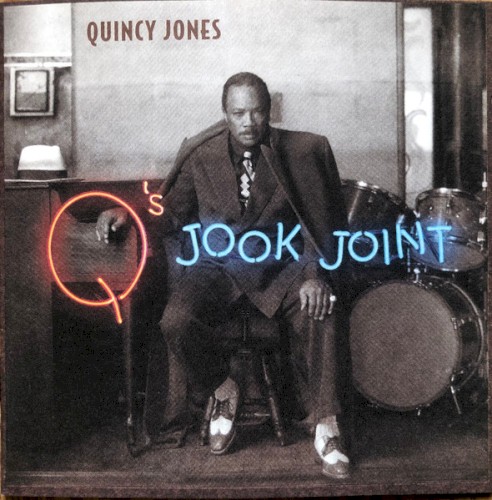
Album Information Section
Album Title: Q’s Jook Joint
Artist: Quincy Jones
Original Release Date: November 7, 1995
Label: Unknown Label
Genres: Jazz, R&B, Pop
Track Listing
- 1. Jook Joint Intro (1:33)
- 2. Let the Good Times Roll (2:55)
- 3. Cool Joe, Mean Joe (Killer Joe) (7:32)
- 4. You Put a Move on My Heart (6:14)
- 5. Rock With You (4:09)
- 6. Moody’s Mood for Love (4:19)
- 7. Stomp (6:16)
- 8. Jook Joint Reprise (0:56)
- 9. Do Nothin’ Till You Hear From Me (3:58)
- 10. Is It Love That We’re Missin’ (4:46)
- 11. Heaven’s Girl (5:27)
- 12. Stuff Like That (5:46)
- 13. Slow Jams (7:31)
- 14. At the End of the Day (Grace) (7:42)
- 15. Jook Joint Outro (0:48)
Recording Information
Q’s Jook Joint was recorded at the famed Ocean Way Recording studios, located in Hollywood, California. The recording sessions took place during the mid-1990s, a period when Quincy Jones was solidifying his legacy as one of the most versatile and celebrated figures in contemporary music.
The album was produced by Quincy Jones himself, alongside a team of talented engineers, including Bruce Swedien, who had previously collaborated with Jones on numerous projects. The production utilized advanced recording techniques and equipment, which were cutting-edge for the time, ensuring a crisp and dynamic sound.
One notable aspect of the production was Jones’s penchant for blending various musical styles, which is reflected in the diverse range of genres present on the album. The album features a mix of jazz, R&B, and pop elements, creating a rich tapestry of sound that showcases Jones’s innovative approach to music-making.
Band Context
At the time of the album’s release, Quincy Jones was not only a legendary musician but also a powerful figure in the entertainment industry. Having produced Michael Jackson’s most iconic albums, Jones was at the pinnacle of his career. Prior to Q’s Jook Joint, he had released the critically acclaimed album Back on the Block in 1989, which won a Grammy for Album of the Year.
The lineup for this album featured a host of talented musicians and vocalists, including special guests like Tevin Campbell, Chaka Khan, and George Benson. This collaborative spirit was emblematic of Jones’s approach, as he often brought together a diverse group of artists to create a unique musical experience.
During this time, Jones was also involved in various philanthropic efforts and was a prominent advocate for social justice, which influenced the themes of unity and celebration found within Q’s Jook Joint. The album can be seen as a reflection of Jones’s desire to bring people together through music, especially in a time marked by social and political tension.
Track Commentary
The album opens with the brief but evocative “Jook Joint Intro,” setting the stage for the festivities that follow. The second track, “Let the Good Times Roll,” is a lively, upbeat number that perfectly captures the celebratory spirit of the album.
Among the standout tracks is “You Put a Move on My Heart,” featuring an emotional vocal performance that highlights the album’s R&B influences. The track showcases the sophisticated arrangements and rich instrumentation that Jones is known for, blending lush strings with soulful melodies.
“Cool Joe, Mean Joe (Killer Joe)” is another highlight, featuring a jazzy groove that pays homage to classic jazz standards while infusing a contemporary flair. The album also includes a masterful rendition of “Moody’s Mood for Love,” which demonstrates Jones’s ability to reinterpret beloved classics with a fresh perspective.
Other notable tracks include “Rock With You,” a reinterpretation of the Michael Jackson hit that showcases the timelessness of Jones’s production style. The album closes with “Jook Joint Outro,” which brings the listener full circle, encapsulating the joyous, communal experience that Q’s Jook Joint aims to convey.
Overall, Q’s Jook Joint received positive critical reception, praised for its eclectic mix and the seamless integration of various musical styles. The album not only solidified Quincy Jones’s status as a musical innovator but also left a lasting legacy, influencing future generations of musicians and producers.
