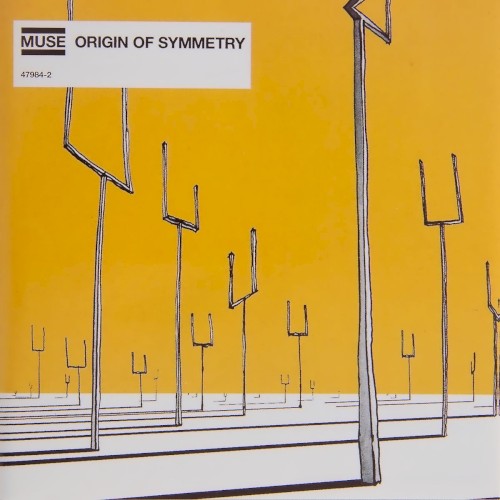
Album Information Section
Title: Origin of Symmetry
Artist: Muse
Original Release Date: June 13, 2001
Label: Unknown Label
Genres: Alternative Rock, Progressive Rock, Space Rock
Track Listing:
- 1. New Born (6:03)
- 2. Bliss (4:12)
- 3. Space Dementia (6:21)
- 4. Hyper Music (3:21)
- 5. Plug In Baby (3:40)
- 6. Citizen Erased (7:19)
- 7. Micro Cuts (3:39)
- 8. Screenager (4:20)
- 9. Darkshines (4:47)
- 10. Feeling Good (3:20)
- 11. Megalomania (4:40)
Recording Information
“Origin of Symmetry” was recorded at the famed Sarm West Studios in London, England. The recording sessions took place primarily in late 2000 and early 2001, capturing a critical period in the band’s evolution. The production was helmed by the band alongside renowned producer John Leckie, who had previously worked with iconic acts like Radiohead and The Stone Roses. The engineering duties were managed by both Leckie and the band’s own Matt Bellamy.
Notable recording techniques included the use of various synthesizers and effects, which contributed to the album’s lush soundscapes. Muse incorporated a range of instruments beyond traditional rock setups, utilizing piano, organ, and even orchestral elements, particularly evident in tracks like “Space Dementia” and “Citizen Erased”. One of the album’s most famous moments, the operatic vocal section in “Megalomania”, was recorded with Bellamy’s distinctive falsetto, showcasing his vocal range and the band’s penchant for theatricality.
Band Context
At the time of “Origin of Symmetry,” Muse consisted of its core members: Matt Bellamy (lead vocals, guitar, piano), Chris Wolstenholme (bass guitar, backing vocals), and Dominic Howard (drums). The band had released their debut album, “Showbiz,” in 1999, which garnered them a following in the UK and laid the groundwork for their explosive sound. However, the band was still navigating the complexities of fame and artistic identity.
During this period, Muse was beginning to break into larger markets, with “Origin of Symmetry” serving as a pivotal moment that would propel them to international stardom. The album included themes of existentialism, anxiety, and romanticism, reflecting the band’s experiences and the cultural zeitgeist of the early 2000s. The success of singles like “Plug In Baby” and “Bliss” established Muse as a leading force in the alternative and progressive rock scenes.
Track Commentary
The album opens with “New Born,” a powerful track that sets the tone for the album’s dramatic and often dystopian themes. The song features a dynamic interplay between heavy guitar riffs and piano, showcasing Bellamy’s virtuosity. “Bliss,” characterized by its infectious chorus and themes of euphoria, became one of the band’s signature songs, often celebrated for its energetic live performances.
“Space Dementia” stands out with its classical influences and intricate arrangements, while “Hyper Music” presents a more aggressive sound, marked by Bellamy’s biting lyrics and frenetic guitar work. “Plug In Baby,” perhaps the most commercially successful track from the album, is notable for its iconic guitar riff and serves as a critique of reliance on technology in relationships.
As the album progresses, “Citizen Erased” emerges as a centerpiece, featuring profound lyrics and a sprawling composition that transitions through multiple musical styles. This track has often been hailed as one of Muse’s finest works, praised for its ambition and complexity. “Micro Cuts” and “Screenager” follow suit, exploring themes of alienation and disconnection.
The latter part of the album includes the soul-stirring rendition of “Feeling Good,” a cover that showcases Muse’s ability to reinterpret classics with their unique flair. The closing track, “Megalomania,” encapsulates the album’s grandiose style with its operatic elements and introspective lyrics, leaving listeners with a haunting sense of reflection.
Overall, “Origin of Symmetry” received critical acclaim upon its release, with many reviewers praising its ambitious scope and eclectic sound. The album not only solidified Muse’s place in the rock genre but also laid the groundwork for their future experimentation with sound and thematic depth. As a result, it remains a landmark album in the early 2000s rock landscape.
