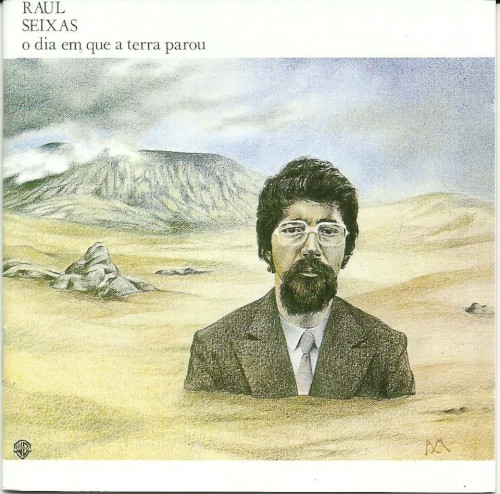
Album Information Section
Album Title: O dia em que a Terra parou
Artist: Raul Seixas
Original Release Date: 1977
Label: Unknown Label
Genres: Rock, Brazilian Popular Music
Track Listing:
- 1. Tapanacara (3:08)
- 2. Maluco beleza (3:25)
- 3. O dia em que a Terra parou (4:26)
- 4. No fundo do quintal da escola (2:59)
- 5. Eu quero mesmo (2:38)
- 6. Sapato 36 (3:20)
- 7. Você (3:11)
- 8. Sim (3:28)
- 9. Que luz é essa? (2:49)
- 10. De cabeça-pra-baixo (2:36)
Recording Information
“O dia em que a Terra parou” was recorded in the late 1970s, specifically in 1977, in various studios in Brazil, although the exact studio names are not widely documented. Raul Seixas collaborated with notable producers and engineers of the time, emphasizing a blend of rock with traditional Brazilian sounds.
The album’s production is characterized by its innovative use of electric instruments juxtaposed with traditional Brazilian rhythms. Seixas’s penchant for storytelling, combined with a heavy rock influence, resulted in a unique sound that stood out in the Brazilian music scene. The production period was marked by a wave of experimental sounds, with Seixas utilizing a range of recording techniques that included layering guitars and incorporating synthesizers, which were becoming more accessible in the late 1970s.
Interestingly, this album also reflects Seixas’s personal ethos and artistic vision during a time of political turbulence in Brazil. His lyrics often challenged societal norms and were infused with his philosophical musings, making the recording session a deeply introspective process.
Band Context
Raul Seixas, often referred to as the “Maluco Beleza” (Beautiful Madman), was a prominent figure in Brazilian rock music. By 1977, he had already established himself as a groundbreaking artist, well known for his eclectic style and thought-provoking lyrics. Leading up to the release of “O dia em que a Terra parou,” Seixas had released several successful albums that cemented his status in the music industry.
At this time, Seixas’s lineup included a mix of talented musicians who contributed to his rich sound. His band featured various instrumentalists who were adept at blending rock with Brazilian music, adding to the album’s layered textures. Before this album, Seixas had faced significant challenges, including disputes with record labels and his struggle to maintain artistic freedom, which influenced the themes present in his work.
During the recording of this album, Seixas was navigating a complex personal life, which included his departure from previous musical partnerships. This period of transition allowed him to explore deeper themes of existence, identity, and societal critique through his music.
Track Commentary
The album opens with “Tapanacara,” a track that sets the tone for the rest of the record with its infectious rhythms and engaging melody. Following this, “Maluco beleza” is one of Seixas’s signature songs, encapsulating his unique persona and connection with his audience. The title track, “O dia em que a Terra parou,” serves as a powerful centerpiece, addressing existential themes and societal observation, which resonates with listeners on multiple levels.
“No fundo do quintal da escola” and “Eu quero mesmo” showcase Seixas’s ability to weave personal narratives with broader social commentary. The energetic “Sapato 36” stands out with its catchy chorus and playful lyrics, while “Você” brings a more introspective moment, reflecting the emotional depth of Seixas’s songwriting.
The latter half of the album includes tracks like “Sim” and “Que luz é essa?” which delve into philosophical inquiries, further establishing Seixas as a voice of his generation. Each song contributes to a cohesive narrative that explores themes of love, life, and existential pondering. The album concludes with “De cabeça-pra-baixo,” leaving listeners with a sense of reflection and contemplation.
Overall, “O dia em que a Terra parou” is not only significant in Raul Seixas’s discography but also in the landscape of Brazilian rock music. Its critical reception has evolved over the years, with many tracks being regarded as classics that continue to influence contemporary artists. The album remains a testament to Seixas’s enduring legacy as a pioneer of Brazilian music, blending rock with the rich cultural tapestry of his homeland.
