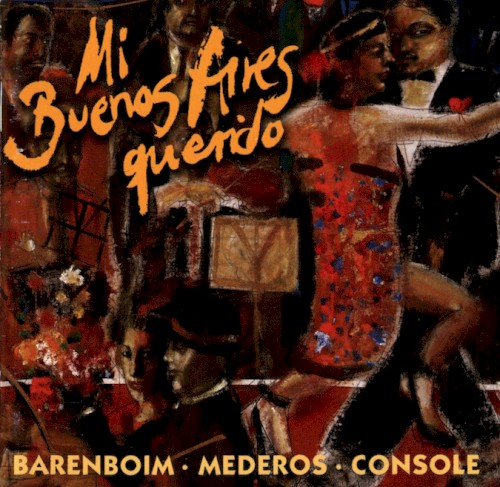
Album Information Section
Title: Mi Buenos Aires querido: Tangos Among Friends
Artist: Daniel Barenboim, Roberto Mederos, and José Console
Original Release Date: 1996
Label: TELDEC
Genres: Tango, Classical
Track Listing:
- 1. Mi Buenos Aires querido (3:57)
- 2. Verano porteño (5:35)
- 3. La moza donosa (3:31)
- 4. Don Agustín Bardi (3:15)
- 5. Tzigane tango (3:28)
- 6. Invierno porteño (3:45)
- 7. Aquellos tangos camperos (3:38)
- 8. Adiós Nonino (4:00)
- 9. El día que me quieras (4:17)
- 10. Primavera porteña (2:34)
- 11. A fuego lento (3:49)
- 12. Otoño porteño (4:53)
- 13. Contrabajeando (3:39)
- 14. Bailecito (1:23)
Recording Information
The album “Mi Buenos Aires querido: Tangos Among Friends” was recorded at the renowned Abbey Road Studios in London, a location synonymous with high-quality production and celebrated recording history. The recording sessions took place in the mid-1990s, specifically during 1995, when the artists came together to create this homage to Argentine tango.
The album was produced by Daniel Barenboim, an esteemed conductor and pianist, known for his interpretations of classical music, alongside Roberto Mederos, a prominent tango musician. The engineering was handled by Daniel G. H. Smith, who utilized state-of-the-art recording techniques that captured the rich textures and nuanced performances of the musicians. The production aimed to blend traditional tango with contemporary classical influences, highlighting the emotional depth of the genre.
One notable aspect of the recording process was the collaborative spirit among the musicians, which added authenticity and warmth to the performances. The use of live recording techniques allowed for spontaneous moments, reminiscent of the vibrant tango scenes found in Buenos Aires.
Band Context
At the time of this album’s release, the trio comprising Daniel Barenboim, Roberto Mederos, and José Console had already established themselves as significant figures in their respective fields. Barenboim was primarily known for his classical music career but had developed a deep appreciation for tango, which he sought to explore through this project. Mederos and Console, both accomplished tango musicians, brought their extensive experience and knowledge of the genre to the collaboration.
Prior to “Mi Buenos Aires querido,” Barenboim had been focusing on orchestral conducting and solo performances, while Mederos and Console were actively involved in the tango music scene, performing regularly in Argentina and internationally. This album marked a significant moment as it represented a fusion of classical and tango traditions, a concept that was gaining traction during the 1990s, a period characterized by a resurgence of interest in traditional Argentine music.
Track Commentary
The album opens with the iconic track “Mi Buenos Aires querido,” a poignant piece that encapsulates the longing and nostalgia associated with the city. The arrangement showcases Barenboim’s classical piano stylings intertwined with the passionate expressions of Mederos and Console.
Tracks such as “Verano porteño” and “Invierno porteño” highlight the seasonal contrasts in Buenos Aires, employing rich orchestration and emotive melodies that are hallmarks of the tango genre. The interplay between the piano and bandoneón creates a dialogue that is both vibrant and introspective, drawing the listener into the rhythmic pulse of tango.
Other standout tracks include “Adiós Nonino,” a tribute to the legendary Astor Piazzolla, which is known for its melancholic yet beautiful themes. The piece showcases the technical prowess of the musicians and their ability to convey deep emotions through their performance. The album also features shorter, lively tracks like “Bailecito,” which bring an energetic flair, encouraging listeners to engage with the essence of tango dance.
Overall, “Mi Buenos Aires querido” received critical acclaim for its authentic representation of tango, along with the exceptional musicianship displayed throughout the album. It remains a significant contribution to the genre, bridging the gap between classical music enthusiasts and tango aficionados, and solidifying the legacies of Barenboim, Mederos, and Console as pivotal figures in the evolution of tango music.
