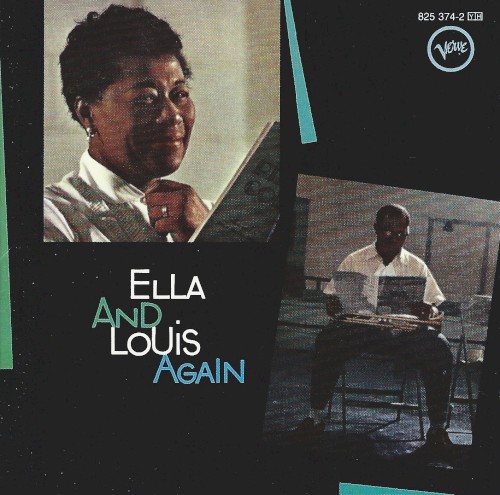
Album Information Section
Album Title: Ella and Louis Again
Artist: Ella Fitzgerald, Louis Armstrong
Original Release Date: October 11, 1957
Label: Unknown Label
Genres: Jazz, Vocal Jazz
Track Listing:
- 1. Don’t Be That Way (4:59)
- 2. They All Laughed (3:49)
- 3. Autumn in New York (6:01)
- 4. Stompin’ at the Savoy (5:14)
- 5. I Won’t Dance (4:47)
- 6. Gee Baby Ain’t I Good to You (4:13)
- 7. Let’s Call the Whole Thing Off (4:14)
- 8. I’ve Got My Love to Keep Me Warm (3:12)
- 9. I’m Putting All My Eggs in One Basket (3:28)
- 10. A Fine Romance (3:53)
- 11. Love Is Here to Stay (4:00)
- 12. Learnin’ the Blues (7:13)
Recording Information
“Ella and Louis Again” was recorded at the iconic Capitol Studios located in Hollywood, California. The sessions took place in 1957, a year marked by significant developments in jazz music. The album was produced by the legendary Norman Granz, who was known for his work in promoting jazz artists and producing high-quality recordings. The engineering for the album was handled by the skilled team at Capitol, employing techniques that maximized the rich, warm tones characteristic of both Fitzgerald’s and Armstrong’s voices.
Notably, the recording process utilized state-of-the-art equipment for the time, allowing for a clarity that highlighted the intricate interplay of the musicians. The album also employed a few innovative recording techniques, such as close-miking and stereo separation, which enhanced the listening experience. An interesting production note is that the chemistry between Fitzgerald and Armstrong was evident during the sessions, leading to spontaneous moments of improvisation that were captured on tape.
Band Context
In 1957, both Ella Fitzgerald and Louis Armstrong were already established icons in the jazz world. Fitzgerald was at the peak of her career, recognized for her impeccable vocal control and improvisational skill, while Armstrong was enjoying a resurgence in popularity after years of pioneering New Orleans jazz. At the time of the album’s recording, Fitzgerald had just completed her successful “Ella Fitzgerald Sings the Gershwin Songbook” series, which showcased her versatility and range.
The lineup for this album primarily featured Fitzgerald and Armstrong, but they were accompanied by a talented group of musicians, including pianist Oscar Peterson, bassist Ray Brown, drummer Ed Thigpen, and others, who contributed to the album’s rich sound. Prior to this release, Fitzgerald and Armstrong had collaborated on the seminal “Ella and Louis” in 1956, which laid the groundwork for their musical partnership. The success of their previous album set high expectations for “Ella and Louis Again,” further solidifying their status as one of jazz’s most beloved duos.
Track Commentary
The album opens with “Don’t Be That Way,” a lively track that showcases Fitzgerald’s powerful vocals and Armstrong’s distinctive trumpet work. This energetic start sets the tone for the rest of the album, blending swing and vocal jazz seamlessly. “They All Laughed” follows, featuring a playful exchange between the two artists that highlights their chemistry and charm.
As the album progresses, tracks like “Autumn in New York” and “Love Is Here to Stay” present a more romantic and introspective side, with lush arrangements that complement the heartfelt performances from both singers. “I Won’t Dance” is a standout track, where the interplay between Fitzgerald’s vibrant vocals and Armstrong’s warm tone creates a joyful atmosphere, exemplifying their unmatched musical synergy.
The album concludes with “Learnin’ the Blues,” a lengthy piece that allows both artists to stretch their improvisational wings, weaving in and out of the melody with ease. The critical reception of “Ella and Louis Again” was overwhelmingly positive, with many praising it as a worthy successor to their previous collaboration. The album is often regarded as a classic in the jazz canon, showcasing the timeless artistry of Fitzgerald and Armstrong, and it remains influential for both singers and jazz musicians alike.
