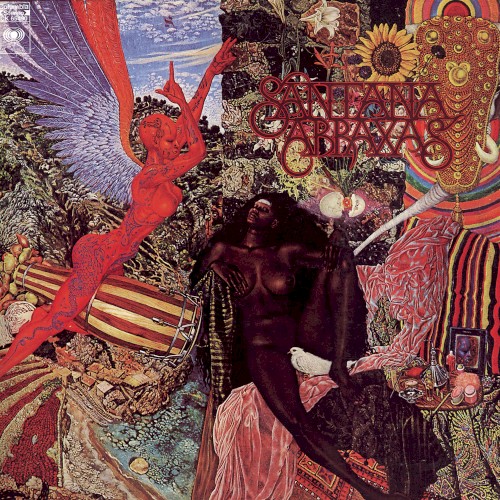
Album Information Section
Album Title: Abraxas
Artist: Santana
Original Release Date: September 23, 1970
Label: Legacy
Genres: Latin Rock, Jazz Fusion, Psychedelic Rock
Track Listing:
- 1. Singing Winds, Crying Beasts (4:51)
- 2. Black Magic Woman / Gypsy Queen (5:20)
- 3. Oye como va (4:20)
- 4. Incident at Neshabur (5:01)
- 5. Se a Cabo (2:52)
- 6. Mother’s Daughter (4:28)
- 7. Samba pa ti (4:48)
- 8. Hope You’re Feeling Better (4:17)
- 9. El Nicoya (1:40)
- 10. Se a Cabo (live, 1970‐04‐18: Royal Albert Hall) (3:48)
- 11. Toussaint L’Overture (live, 1970‐04‐18: Royal Albert Hall) (4:52)
- 12. Black Magic Woman / Gypsy Queen (live, 1970‐04‐18: Royal Albert Hall) (4:57)
Recording Information
The album “Abraxas” was recorded at the Wally Heider Studios located in San Francisco, California. The recording sessions took place primarily in 1970, a period marked by the band’s rapid rise to fame following their performance at Woodstock in 1969. Produced by the renowned Santana bandleader Carlos Santana along with the influential producer and engineer, Mike Stone, “Abraxas” showcases a blend of rock, jazz, and Latin influences.
Notable techniques employed during the recording included innovative use of percussion instruments and intricate guitar layering, which would become a hallmark of Santana’s sound. The album also utilized high-quality analog recording equipment that helped capture the vibrant energy of the band’s performances. An interesting note about the production is that it reflects Santana’s desire to merge different musical genres, drawing from his Mexican heritage while incorporating the improvisational aspects of jazz.
Band Context
At the time of “Abraxas,” Santana was on the cusp of becoming one of the most influential rock bands of the early 1970s. Formed in 1966, the band was led by guitarist Carlos Santana, who was known for his fiery guitar style and fusion of rock with Latin music. The lineup during the recording of “Abraxas” included Carlos Santana (guitar, vocals), Gregg Rolie (vocals, keyboards), David Brown (bass), Michael Carabello (percussion), and José “Chepito” Areas (percussion).
Prior to “Abraxas,” Santana had achieved considerable success with their debut album, “Santana,” which featured the iconic track “Soul Sacrifice.” The band had gained a reputation for their electrifying live performances, which helped them secure a loyal following. By the time they were recording “Abraxas,” they were eager to build on their success and expand their sound, leading to a significant evolution in their musical style.
Track Commentary
“Abraxas” opens with the mystical instrumental “Singing Winds, Crying Beasts,” which sets a tone of introspection and exploration. The album’s standout track, “Black Magic Woman / Gypsy Queen,” showcases Santana’s signature guitar work and features a blend of rock and Latin rhythms, solidifying its place as a classic. The song’s success was further enhanced by its chart performance, reaching the top of the Billboard Hot 100, which significantly boosted the band’s profile.
Another highlight, “Oye como va,” originally written by Tito Puente, demonstrates the band’s ability to reinterpret Latin music within a rock context, featuring infectious grooves and catchy melodies. The track has since become synonymous with Santana, often viewed as a definitive representation of Latin rock.
Other notable tracks include “Incident at Neshabur,” which fuses jazz elements with a Latin flair, and “Samba pa ti,” a beautiful instrumental piece that showcases Carlos Santana’s emotive guitar playing. The album closes with three live tracks recorded at the Royal Albert Hall in April 1970, capturing the raw energy and improvisational spirit of the band during their live performances.
Overall, “Abraxas” received widespread critical acclaim upon its release and has since been recognized as one of the greatest albums of all time, influencing countless musicians and solidifying Santana’s legacy as a pioneer of Latin rock. The album’s unique fusion of genres continues to resonate with audiences, ensuring its enduring popularity and relevance in the music world.
