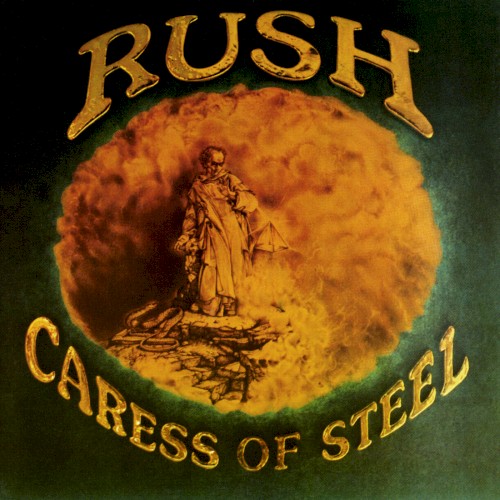
Album Information Section
Album Title: Caress of Steel
Artist: Rush
Original Release Date: September 15, 1975
Label: Unknown Label
Genres: Progressive Rock
Track Listing
- 1. Bastille Day (4:40)
- 2. I Think I’m Going Bald (3:41)
- 3. Lakeside Park (4:11)
- 4. The Necromancer: I. Into the Darkness / II. Under the Shadow / III. Return of the Prince (12:32)
- 5. The Fountain of Lamneth: I. In the Valley / II. Didacts and Narpets / III. No One at the Bridge / IV. Panacea / V. Bacchus Plateau / VI. The Fountain (19:58)
Recording Information
“Caress of Steel” was recorded at the Toronto Sound Studios in Toronto, Canada. The recording sessions took place primarily in 1975, coinciding with a period of intense creativity for the band. The album was produced by Geddy Lee, Alex Lifeson, and Neil Peart, showcasing the band’s commitment to self-production during their formative years. The engineering was handled by Paul Northfield, who was instrumental in capturing the intricate sound that the band sought.
Notable recording techniques included the use of analog equipment, which contributed to the warm, rich sound characteristic of the era. The band’s preference for live takes over overdubs allowed for a more organic feel throughout the album. An interesting production note is that during the recording of “The Necromancer,” the band experimented with layered guitar harmonies and dynamic shifts, which would become a hallmark of their later works.
Band Context
At the time of “Caress of Steel,” Rush was navigating the challenges of establishing their identity in the rock world. Following the release of their self-titled debut album in 1974 and the subsequent “Fly by Night,” the band was beginning to carve out a niche within the progressive rock genre. The lineup during this recording consisted of Geddy Lee (bass, vocals, keyboards), Alex Lifeson (guitar, backing vocals), and Neil Peart (drums, lyrics), a trio that would remain intact for decades.
Before the release of “Caress of Steel,” the band had experienced a modest level of success, but they were still largely under the radar. The album’s release was met with mixed reviews, and it did not achieve commercial success initially, leading to concerns about the band’s future. However, the creative risks taken in this album, particularly its ambitious length and conceptual tracks, would later be seen as pivotal in laying the groundwork for their more successful works in the late 1970s and beyond.
Track Commentary
The album opens with “Bastille Day,” a rousing anthem that combines hard rock with progressive elements, showcasing the band’s signature sound. The track’s themes of freedom and revolution resonate strongly, making it a staple in Rush’s live performances.
“I Think I’m Going Bald” provides a more humorous take with its lyrical content, contrasting the serious themes of the other tracks. Musically, it incorporates a hard rock style with catchy hooks, demonstrating the band’s versatility. “Lakeside Park” shifts the mood with its reflective tone, encapsulating nostalgia and the passage of time, while employing a more melodic structure that highlights Lee’s vocal prowess.
The centerpiece of the album is undoubtedly “The Necromancer,” a three-part epic that delves into darker themes and showcases the band’s storytelling ability. Its progressive structure features intricate time signatures and dynamic shifts, which would become a defining characteristic of their later works. Lastly, “The Fountain of Lamneth” serves as the album’s grand finale, a nearly 20-minute journey that combines various musical styles ranging from hard rock to more atmospheric sections, illustrating the band’s ambition and creativity.
While “Caress of Steel” received a mixed critical reception upon its release, its legacy has grown over the years. Tracks like “Bastille Day” have been embraced as classics, and the album itself is often viewed as a crucial step in Rush’s evolution, paving the way for their subsequent, more successful albums such as “2112” and “A Farewell to Kings.” The album’s willingness to blend different musical styles and concepts has cemented its place in the annals of progressive rock history.
