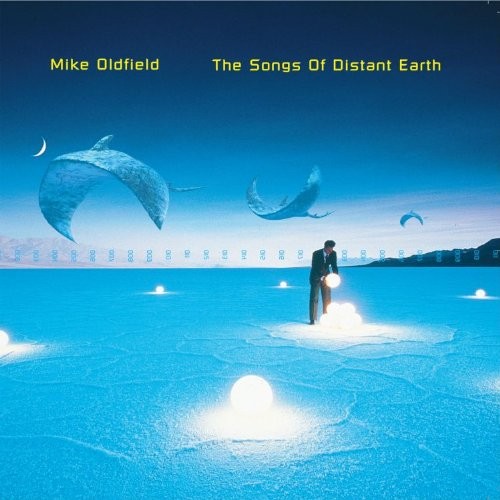
Album Information Section
Album Title: The Songs of Distant Earth
Artist: Mike Oldfield
Original Release Date: 1994-11-21
Label: Unknown Label
Genres: New Age, Progressive Rock, Instrumental
Track Listing:
- 1. In the Beginning (1:25)
- 2. Let There Be Light (4:57)
- 3. Supernova (3:24)
- 4. Magellan (4:41)
- 5. First Landing (1:16)
- 6. Oceania (3:20)
- 7. Only Time Will Tell (4:26)
- 8. Prayer for the Earth (2:10)
- 9. Lament for Atlantis (2:44)
- 10. The Chamber (1:48)
- 11. Hibernaculum (3:33)
- 12. Tubular World (3:24)
- 13. The Shining Ones (2:57)
- 14. Crystal Clear (5:42)
- 15. The Sunken Forest (2:38)
- 16. Ascension (5:50)
- 17. A New Beginning (1:33)
Recording Information
The Songs of Distant Earth was recorded at the renowned Angel Studios in London, England. The recording sessions took place in 1994, coinciding with a period of significant creativity for Mike Oldfield. The album was produced by Oldfield himself, alongside Simon Phillips as the engineer, who is well-known for his work with various prominent artists.
Oldfield utilized a variety of innovative recording techniques and equipment, including advanced synthesizers and digital recording methods that were becoming increasingly popular in the 1990s. Notably, the album was inspired by Arthur C. Clarke’s science fiction short story of the same name, which informed the thematic elements and soundscapes throughout the work. Oldfield’s exploration of ambient and orchestral arrangements is evident, as he sought to create a sonic interpretation of the cosmos and humanity’s place within it.
Band Context
At the time of the album’s release, Mike Oldfield was already an established figure in the music industry, having gained fame with his debut album Tubular Bells in 1973. Following a series of successful projects throughout the 1980s and early 1990s, including the Tubular Bells II and The Songs of Distant Earth marked a significant moment in Oldfield’s career, as it represented a return to instrumental music after a brief foray into more commercial sounds.
During this period, Oldfield was experiencing a shift in his musical direction, moving away from rock-oriented compositions towards a more atmospheric and thematic sound. The lineup for this album primarily featured Oldfield himself, with contributions from several session musicians who provided a rich tapestry of sounds, enhancing the ethereal quality of the music. This album was particularly notable as it did not include a traditional band setup, instead relying on Oldfield’s multi-instrumental talents and a variety of guest musicians.
Track Commentary
The Songs of Distant Earth opens with “In the Beginning,” a brief introduction that sets the stage for the album’s exploration of cosmic themes. “Let There Be Light” follows, showcasing Oldfield’s signature blend of melodic guitar lines and lush synthesizer arrangements. This track, along with “Supernova” and “Magellan,” exemplifies the album’s overarching theme of the universe, featuring intricate compositions that evoke feelings of wonder and exploration.
Tracks like “Prayer for the Earth” and “Lament for Atlantis” delve into more poignant themes, with the former conveying a sense of reverence for nature and humanity’s impact on the planet. The peaceful melodies and atmospheric soundscapes invite listeners to reflect on their own existence in relation to the vastness of the cosmos.
As the album progresses, tracks such as “Crystal Clear” and “Ascension” stand out for their more dynamic arrangements and emotional depth, showcasing Oldfield’s ability to fuse classical elements with modern production techniques. “Ascension” serves as a climactic point in the album, building tension and resolution, while “A New Beginning” concludes the journey on a hopeful note, encapsulating the essence of renewal and exploration.
Overall, The Songs of Distant Earth received a generally positive reception, with critics praising its ambitious scope and Oldfield’s mastery of instrumental storytelling. While it may not have produced hit singles in the traditional sense, tracks from the album have since become fan favorites, solidifying its place in Oldfield’s discography and in the broader context of instrumental and new age music.
