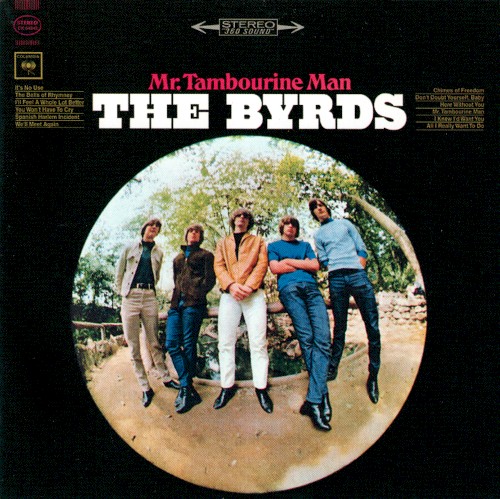
Album Information Section
Album Title: Mr. Tambourine Man
Artist: The Byrds
Original Release Date: 1965-06-21
Label: Columbia
Genres: Folk Rock, Rock
Track Listing
- 1. Mr. Tambourine Man (2:34)
- 2. I’ll Feel a Whole Lot Better (2:36)
- 3. Spanish Harlem Incident (2:01)
- 4. You Won’t Have to Cry (2:12)
- 5. Here Without You (2:40)
- 6. The Bells of Rhymney (3:34)
- 7. All I Really Want to Do (2:08)
- 8. I Knew I’d Want You (2:18)
- 9. It’s No Use (2:28)
- 10. Don’t Doubt Yourself, Babe (2:59)
- 11. Chimes of Freedom (3:55)
- 12. We’ll Meet Again (2:18)
- 13. She Has a Way (2:29)
- 14. I’ll Feel a Whole Lot Better (alternate version) (2:32)
- 15. It’s No Use (alternate version) (2:28)
- 16. You Won’t Have to Cry (alternate version) (2:11)
- 17. All I Really Want to Do (single version) (2:07)
- 18. You and Me (instrumental) (2:12)
Recording Information
The album “Mr. Tambourine Man” was recorded at Columbia Studios, located in Hollywood, California. The recording process took place between late 1964 and early 1965, a time when the band was rapidly gaining recognition in the music industry.
The album was produced by Jim Dickson, a pivotal figure in the Byrds’ early career, with engineering handled by the studio staff at Columbia. Notably, the album features innovative recording techniques that were groundbreaking for the era, including the use of electric 12-string guitars, which contributed to the Byrds’ signature jangle pop sound.
One interesting production note is that the band recorded the title track “Mr. Tambourine Man” with Bob Dylan’s original demo as a reference, allowing them to capture the essence of Dylan’s songwriting while infusing their own musical identity into the song.
Band Context
At the time of “Mr. Tambourine Man’s” release, The Byrds were emerging as a leading force in the folk rock genre, blending elements of folk music with rock and roll. The band consisted of five members: Roger McGuinn (lead guitar, vocals), Gene Clark (vocals, rhythm guitar), David Crosby (vocals, guitar), Chris Hillman (bass, vocals), and Michael Clarke (drums). This lineup was instrumental in defining the band’s sound during this pivotal period.
Before the release of their debut album, the Byrds were gaining traction with their cover of Bob Dylan’s “Mr. Tambourine Man,” which quickly became a hit single. The band’s transition from performing folk music to incorporating rock elements was a significant shift that resonated with the youth culture of the mid-1960s. Their success with the album not only solidified their place in music history but also signaled the beginning of a turbulent yet fruitful era in their career, marked by internal conflicts and personal changes in the lineup.
Track Commentary
The album opens with the iconic title track “Mr. Tambourine Man,” which showcases the Byrds’ unique sound characterized by McGuinn’s jangly guitar riffs and harmonious vocals. This song became a defining anthem of the 1960s and is often credited with popularizing folk rock.
Tracks like “I’ll Feel a Whole Lot Better” and “You Won’t Have to Cry” highlight the band’s ability to blend introspective lyrics with catchy melodies, further establishing their sonic identity. “Chimes of Freedom,” another standout track, showcases the Byrds’ aptitude for interpreting Dylan’s complex lyrics, emphasizing their artistic maturity.
Moreover, the inclusion of alternate versions of songs like “I’ll Feel a Whole Lot Better” and “It’s No Use” in the 1996 pressing offers fans an intriguing glimpse into the band’s creative process and evolution. The album’s critical reception was overwhelmingly positive, with many praising its innovation and influence on subsequent generations of musicians. The Byrds’ legacy, cemented by “Mr. Tambourine Man,” continues to inspire artists across genres, underscoring the album’s enduring significance in the annals of music history.
